
Though many business owners might already know the benefits of tokenizing real-world assets, the common question that arises among them is,
How do you actually create an RWA token?


The answer is quite technical. And that’s why we have crafted this blog to help you understand the 7 simple steps behind it, making it easy for you to get started quickly.
Before diving into the steps involved in tokenizing a real-world asset, it is important for you to understand what Real-World Asset tokenization actually means.
What is Real-World Asset Tokenization?
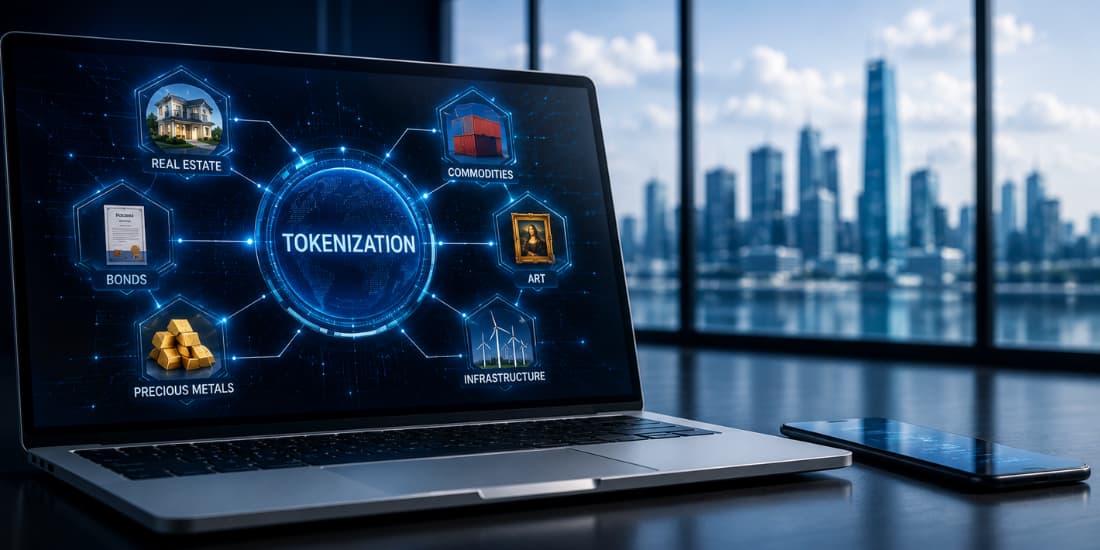
Real-World Asset tokenization is the process of converting a real-world asset, like real estate or commodities, into secure digital tokens on a blockchain platform.
Assets that can be Tokenized Include
| Asset Category | Examples |
| Tangible Assets | Real Estate, Artwork, Gold, Diamond |
| Intangible Assets | Carbon Credits, Intellectual Property |
| Financial Assets | Stocks, Bonds |
The RWA tokenization approach has enabled anyone to own a high-net-worth asset through a concept called fractional ownership.
Tokenizing a physical asset involves more steps than just minting tokens on the blockchain. Let’s look into the technical processes involved in it in detail.
How to Tokenize Real-World Assets?
Tokenizing your Real-World Assets includes 7 simple steps, starting from
- Identifying the Real-World Asset
- Defining the Type of Token
- Performing Legal Structuring of the RWA
- Choosing a Blockchain Network
- Token Creation
- Token Distribution
- Token Management
Step 1: Identifying the Real-World Asset
As any real-world asset can be converted into a digital token, identifying the apt one for your business is a must. You have to figure out which and why you are going to tokenize your physical asset.
Ask yourself whether tokenizing this particular asset will actually benefit you.
Choosing a tangible or intangible asset depends on your wish. Make sure to select an asset that holds value.
Before moving into further processing, do a thorough verification of the asset’s legitimacy. Here are 3 factors you should look into
- Ownership of the RWA
- Confirming that the asset does not have ownership issues
- Determining the asset’s current market value
These factors will help you to confirm whether the asset is suitable for tokenization or not.
Step 2: Defining the Type of Token
Decide whether you are going to create a fungible or non-fungible token type.
Also, select the token standard, such as ERC-20 or ERC-721, which is to be used when creating your digital token.
Essential token standards include:
- ERC-20
Applicable for fungible assets like bonds and stablecoins - ERC-721
Applicable for assets like artworks
Next, you should determine the number of tokens that you need to create, the mechanism governing token minting, and other associated parameters.
Step 3: Performing Legal Structuring of the RWA
Before you tokenize your asset, make sure to get approvals from the regulatory bodies. It is essential to adhere to the legal frameworks governing the asset class and jurisdiction.
Also, determining the right tokenization structure is a must.
There are two common types of tokenization structure that includes direct asset tokenization and indirect asset tokenization. Let me elaborate on it.
- Direct Asset Tokenization
It is a type of tokenization structure where the underlying asset itself is tokenized. The tokens created through this approach represent a direct claim on the asset.
This method is less chosen as it lacks regulatory clarity.
- Indirect Asset Tokenization
It is also called Tokenized SPV (Special Purpose Vehicle), where the token is created for the asset held by an entity or a private organization.
This method is often opted as it provides regulatory clarity.
Legal structuring helps you to establish a transparent and secure foundation for your asset’s digital representation.
Step 4: Choosing a Blockchain Network
Once you are ready with your legal documents, choose the right blockchain network for your real-world asset tokenization.
Select a blockchain platform that has smart contract capabilities. This will help you to plan the RWA tokenization processes, such as dividend distribution, governance, and ownership transfers.
This will help you to automate the process of token distribution.
Also, decide whether you are going to issue your token in a public or permissioned blockchain network.
Step 5: Token Creation
Here comes the main step in the tokenization process, that is, the creation of digital tokens for the underlying real-world asset.
Decide on the total supply of the tokens. Also, determine whether your tokens are going to be distributed fractionally or as a complete unit.
Once these parameters are decided, the token minting process starts. It refers to the creation of new digital tokens on the blockchain platform that represent the ownership of the underlying real-world asset.
Digital tokens that represent the ownership of the asset will be created and represented on a blockchain network as a fraction or unit of an RWA.
Step 6: Token Distribution
Upon the completion of token creation, you can distribute the tokens to the investors who hold a stake in the tokenized real-world asset.
It will enable more investors to own a fraction of the real-world assets.
Step 7: Token Management
After launching your digital RWA token, you will be involved in services like tax management, asset valuation, and dividend distribution.
You will be required to perform these services till your token reaches maturity or the redemption period.
On the other hand, it is essential to adhere to the regulatory requirements. So, you should monitor the securities law and implement any changes that are released.
Last but not least, update your smart contract and conduct regular security audits to carry out the automated processes without any discrepancies.
Checklist for a Successful Tokenization Project
Here are 9 points that you should look into to carry out a successful tokenization project. This will help token issuers to perform a smooth and compliant launch.
- Assess the demand for your tokenized asset by analyzing similar projects and understanding investors’ interest.
- Ensure whether tokenizing your RWA will open doors to new revenue streams and other competitive advantages.
- Evaluate the asset’s net value and verify its ownership before carrying out the tokenization process.
- Select an appropriate jurisdiction for your token offering based on the governing laws, target investors, and goals of the token offering.
- Select a suitable tokenization structure based on your business goals and regulations.
- Choose a suitable token name and define the token supply, distribution model, and pricing strategy.
- Choose between private and public blockchain platforms based on your security, interoperability, and privacy requirements.
- Ensure to implement key security measures like KYC/AML implementation, 2F authentication, and regular smart contract audits.
- Develop a comprehensive marketing strategy to attract potential investors.
Why Should Businesses Tokenize Their Assets?
RWA tokenization offers various benefits for businesses. Let me list out some of the important ones.
- Tokenizing RWAs can enable businesses to fractionalize their assets and enhance the liquidity of the assets.
- It can also create a secondary market as the RWA tokens can be traded anywhere in real-time.
- Tokenizing RWAs can help you to create a fractional ownership of the asset, allowing more investors to participate.
- Tokenized assets can be offered to investors all over the world, thus providing global access to the investors.
- All the transactions are recorded on-chain, therefore providing greater visibility and immutability.
- Token issuance and related operations can be automated through smart contracts, which helps in eliminating manual effort and lowering operational costs.
Challenges Associated with RWA Tokenization
Though real-world asset tokenization has ‘n’ number of advantages, it also comes with certain challenges. It includes the following.
- Regulatory compliance can vary across different regions; adhering to those might be a challenging task.
- Smart contracts are those that automate the token distribution processes. Errors or bugs in a smart contract may lead to operational failures.
- Though tokenization is done on blockchain technology, it can be targeted by cyber attackers.
- Failing to provide a clear legal agreement on ownership may create discrepancies for both the token issuer and investor.
- Last but not least, the tokenized asset should have enough buyers and sellers to maintain the liquidity of the asset.
Conclusion
The tokenization of real-world assets has created a greater impact on the financial and blockchain landscape.
Businesses are widely moving towards converting their physical assets into blockchain tokens, which provides them with an opportunity to raise capital for high-value assets. As the technology continues to evolve, the combination of RWA tokenization and blockchain technology is likely to improve the potential of investment opportunities.
The drive towards tokenization is increasing the demand for Real-World Asset tokenization platforms. So, starting your own platform to provide RWA tokenization service can help you stay competitive in the market.
Building an RWA tokenization platform involves asset valuation, smart contracts, compliance, and blockchain setup. An RWA tokenization development company has usually dealt with these challenges before.